
Anaconda vs. Titanoboa: Clash of the Titans
Long before the Amazon was home to modern anacondas, prehistoric swamps were ruled by Titanoboa, a snake stretching over 40 feet in length and weighing more than a ton. Unearthed fossils in Colombia painted a picture of a reptile so immense it could rival the strength of a crocodile and dominate entire ecosystems. While Titanoboa is now extinct, today’s green anaconda is its closest living rival, still reaching lengths of 25 to 30 feet in rare cases and weighing over 500 pounds. The comparison between the two sparks endless fascination: could the modern anaconda be a living echo of this prehistoric giant, surviving in hidden corners of the jungle where few humans dare to tread? For scientists, the parallels between Titanoboa and anacondas suggest that evolution never truly forgets—it only reshapes its masterpieces for a new era.
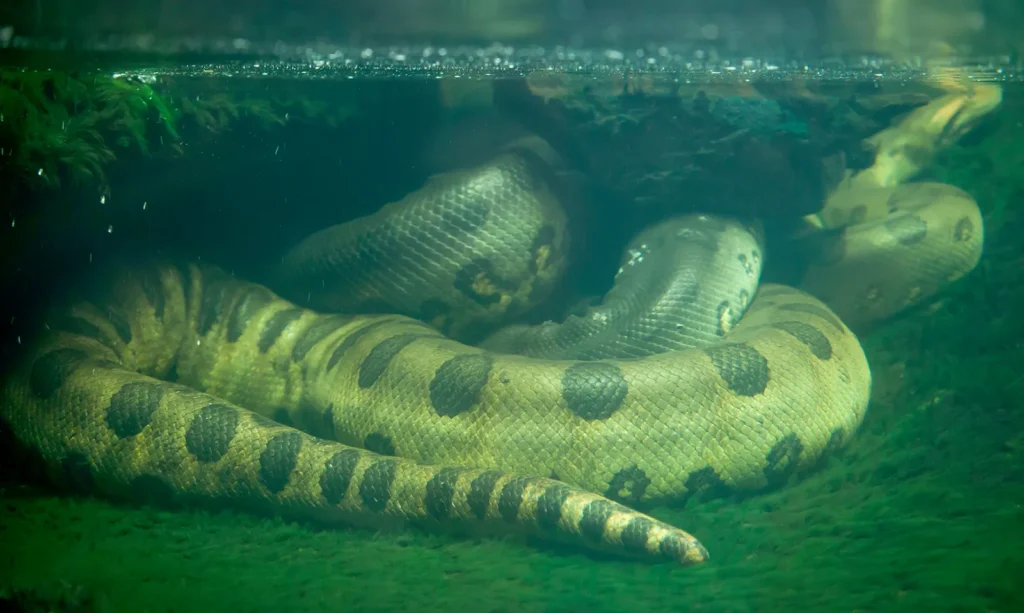
Scientists suggest that while Titanoboa thrived in a warmer, wetter prehistoric world, the giant anaconda represents adaptation and endurance in a modern ecosystem that is far less forgiving. What’s remarkable is that even after 60 million years, these serpents continue to reign as some of the most powerful creatures on Earth. Each discovery hints at a lineage that never lost its dominance, and every anaconda sighting feels like glimpsing a shadow of Earth’s primeval past.